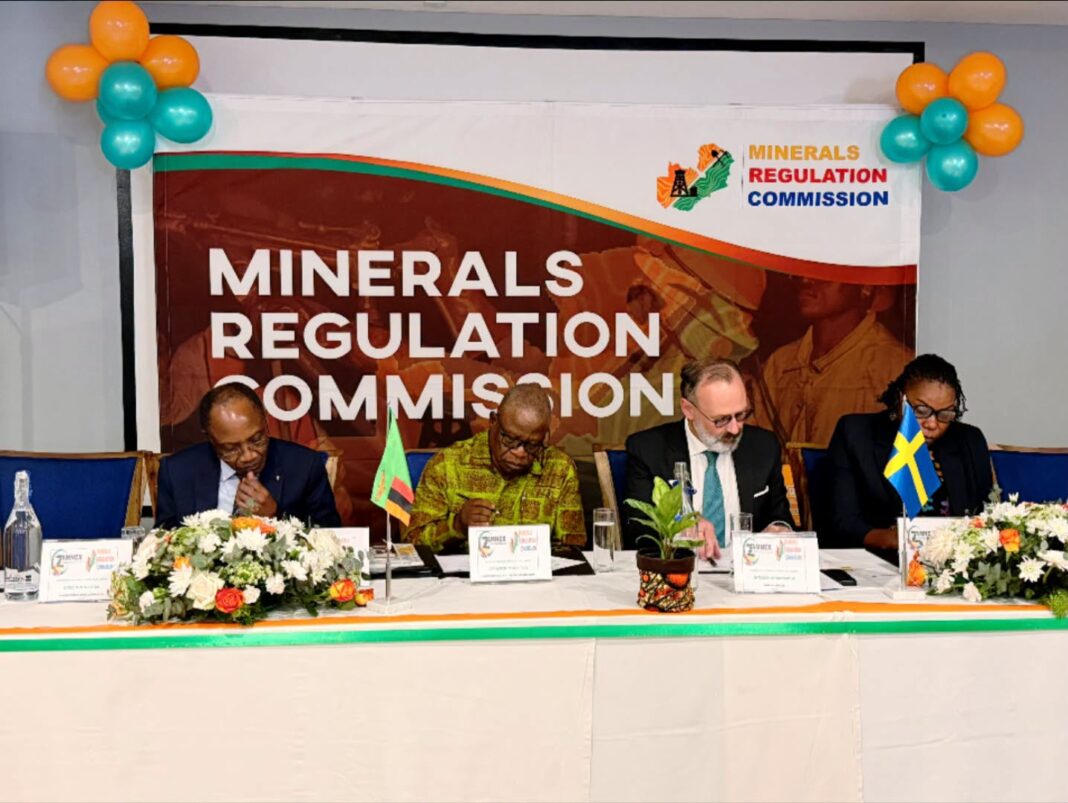
The Zambian Government has reaffirmed its commitment to responsible and sustainable mining with the launch of the Guidelines for Mine Closure Plans in Zambia, a new framework designed to strengthen environmental protection, regulatory compliance, and long-term mine rehabilitation.
The guidelines, developed by the Minerals Regulation Commission (MRC), provide a comprehensive national framework for planning, implementing, reviewing, and regulating mine closure activities across the country.
Speaking at the official launch, Ministry of Mines and Minerals Development Permanent Secretary, Dr Hapenga Kabeta, urged mining companies, regulators, traditional leaders, and other stakeholders to adopt the guidelines as a shared blueprint for responsible mining.
“As Zambia continues its drive to increase copper production and attract greater investment in critical minerals, the role of strong regulatory institutions becomes even more important,” Dr Kabeta said.
He noted that predictable, transparent, and enforceable mine closure requirements not only build investor confidence but also assure citizens that mining activities will leave a positive and lasting legacy.
“Predictable, transparent and enforceable mine closure requirements provide confidence to investors while assuring citizens that mining activities will leave a positive and lasting legacy,” he said.
Dr Kabeta added that government remains committed to strengthening institutional capacity, improving regulatory compliance, encouraging innovation, and enhancing collaboration between the Minerals Regulation Commission, the Zambia Environmental Management Agency (ZEMA), and other key institutions responsible for overseeing the mining sector.
Sustainable Mining at the Core
Swedish Ambassador to Zambia Johan Hallenborg described the launch of the guidelines as a significant milestone for Zambia’s mining industry and all stakeholders involved.
He emphasized that mine closure extends beyond technical requirements and plays a critical role in protecting the environment while safeguarding the interests of future generations.
“Mine closure is not just a technical issue. It is about protecting the environment and ensuring that the benefits of mining do not come at the expense of future generations,” Hallenborg said.
He reaffirmed Sweden’s support for sustainable mining initiatives, noting that responsible mining can contribute to economic development while preserving natural resources and supporting sustainable livelihoods.
A National Framework for Mine Closure
Minerals Regulation Commission Director General Dr Thomlinson Hara said the guidelines were established under Section 95 of the Minerals Regulation Commission Act No. 14 of 2024.
He explained that the framework is intended to assist mining companies, consultants, regulators, local communities, and other stakeholders in preparing comprehensive Mine Closure Plans that align with national standards.
“The purpose of these guidelines is to assist mining companies, regulators, consultants, local communities and other stakeholders in preparing comprehensive Mine Closure Plans,” Dr Hara said.
Encouraging Early Planning
ZAMNEX Programme Manager Andreas Lindstrom said the guidelines encourage government institutions, regulators, and mining companies to integrate mine closure planning from the earliest stages of mining projects rather than waiting until operations cease.
According to Lindstrom, early planning will help protect the environment, promote the responsible use of Zambia’s mineral resources, and strengthen the country’s long-term economic development.
“Together, we must ensure that the principles contained within these guidelines become part of everyday practice within the mining sector,” he said.
International Support
Minerals Regulation Commission Director for Mine Inspections and Audits Elite Mhone acknowledged the support provided by the Swedish International Development Cooperation Agency (Sida) through the Swedish Environmental Protection Agency (SwEPA) under the Zambian Mining in the Nexus of Environment, Human Rights and Climate Change (ZAMNEX) programme.
She said the financial and technical assistance received from the Swedish partners played a key role in developing and implementing the new national mine closure guidelines.
The introduction of the Mine Closure Guidelines marks another step in Zambia’s efforts to promote responsible mineral development, improve environmental stewardship, and ensure that mining continues to deliver lasting economic and social benefits long after operations have ended.