

America Must Prioritize Critical Mineral Resilience to Mineral Independence
During a high-profile roundtable on American Mining in August, President Trump outlined that as “America won our political independence in the Revolutionary War…in my second term, we’re achieving our economic independence, ensuring that America is never again reliant on hostile foreign nations for the resources our country needs.”
While Washington is right to worry about vulnerable mineral supplies, the pursuit of complete independence may be the wrong objective. Instead of self-sufficiency, aiming for supply chains that are resilient enough may guarantee that the loss of a particular mine, refinery or export controls imposed by a specific country do not translate into a significant strategic loss for the U.S.
A supply chain spanning the U.S., Canada, Australia, Japan and South Korea, although international, can be more resilient if it is comprised of trusted partners in a variety of jurisdictions. As resilience has several key aspects, Washington must focus on more than simply where a mineral is mined, processed and refined. Rather, it must consider who controls decision making at the companies involved, who purchases output and whether the project can survive fluctuating commodity-price cycles. The question of if regulatory processes and permitting allow projects to develop in a timely manner is similarly important.
A recent partnership program between the U.S. and South Korea serves as a good example of the approach. Korea Zinc’s $7.4 billion zinc smelter project in Tennessee has been described as an economic-security initiative and singled out by President Trump as an impactful project for the U.S. economy. The project aligns well with Washington’s efforts to reduce U.S. reliance on Chinese supply while making a joint investment with a trusted partner.
However, the corporate governance dispute that has unfolded between Korea Zinc’s existing leadership and a consortium between Young Poong and MBK Partners, who hold 46% of shares, showcases the broader issue of how strategic assets can be affected by governance arrangements.
In 2025, MBK Partners and Young Poong have voted against all five project-related agenda items at the board meeting, including on the allotment of new shares to the joint venture in Tennessee, attracting investment from the U.S. and acquiring assets in support of the project on U.S. soil in an attempt to torpedo the project.
The dispute also raises a broader concern for Washington about who could ultimately control Korea Zinc and influence the direction of its planned U.S. project. MBK Partners holds a call option for Young Poong’s Korea Zinc shares at KRW 700,000 per share, rising 5% a year – a price well below than trading level seen over the past two years since the agreement was signed. Conversely, Young Poong holds a put option to sell those same shares on identical terms. While MBK argues it can only exercise its option after fully recouping its initial investment, MBK’s standing in Korea Zinc could strengthen further depending on how the ownership dispute unfolds.
The presence of the state-owned China Investment Corporation in MBK Partners’ Fund VI underpins the issue. While none of the above has anything to do with the geographic location of zinc deposits or refineries, a strategically important U.S. critical-minerals project could become exposed to potential Chinese control in the long run or at the very least, give China intimate knowledge of Korea Zinc’s proprietary smelting processes.
Lithium Americas’ Thacker Pass mine in Nevada provides an example of a project that concentrated extraction, processing and private investments domestically. The U.S. Department of Energy provided a $1.97 billion loan to support the construction of new processing facilities while GM acquired a 38% stake in the mine, entering into a long-term offtake agreement, with implementation to take place under two phases, each spanning 20 years.
Substantial government financing and GM’s long-term involvement resolve some of the risks associated with demand. Nevertheless, concentrations and dependency risks have not been eliminated. As a consequential owner and customer at the same time, GM’s involvement in the project creates an overwhelming dependency on a single company. This makes the project’s commercial outlook more sensitive to changes in GM’s battery strategy.
Sophisticated forecasts have been included in the agreement that project changes in production limits, demand volumes from third-party customers and GM’s own requirements. While this long-term offtake framework is an important foundation, it does not eliminate risks related to the construction of the mine and processing plant based on today’s cost estimates, the product’s quality and changes in demand, especially along an extended period of implementation. If construction costs rise, commissioning is delayed or the material fails to meet agreed specifications, the project could struggle to meet its commercial commitments despite having secured financing and a major customer.
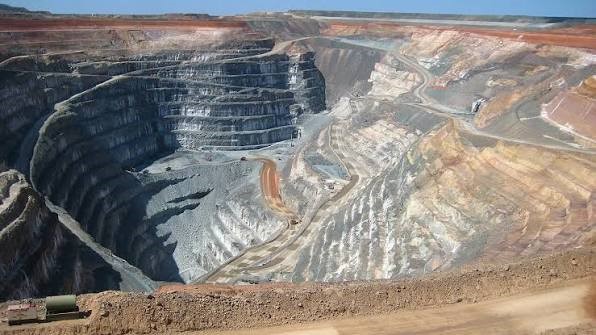
Resolution Copper’s project in Arizona provides another warning about the gap between geological abundance and reliable supply. Owned by Rio Tinto and BHP, the project is one of the most important sources of copper in the U.S. The paradox of the project is that while a massive geological deposit has been located, capable of supplying 25% of U.S. copper demand, regulatory and legal processes could keep the resources locked underground for decades.
Following the initial joint venture between Rio Tinto and BHP in 2013, it took over a decade for the essential land swap to take place with the U.S. Forest Service due to the requirements of the National Environmental Policy Act (NEPA). The proximity of the project to the San Carlos Apache Tribe’s lands added a further layer of complexity to seeking permissions.
These cases highlight three distinct dimensions of mineral resilience. Korea Zinc shows how corporate control can weaken strategic direction and place a strategic partner at risk of foreign control. Thacker Pass demonstrates the value of durable customers and financing, while Resolution Copper illustrates that domestic resources remain exposed to permitting and political risk.
A resilient supply chain must therefore withstand more than just geopolitical shock. It must be able to absorb changes in ownership, financing, demand, permitting and execution. For the United States, the goal should not be complete mineral independence, but diversified and resilient supply chains that cannot be disrupted by the failure of any single link.





Leave a Reply