As Southern Africa’s mining sector races to meet growing global demand for critical minerals, the pressure on transport and logistics infrastructure has never been greater. Congested rail networks, busy ports, equipment downtime, fuel shortages and fragmented operational data continue to limit productivity and increase operating costs. Yet, while the industry often focuses on building new infrastructure, there is significant untapped potential within the assets that already exist.
Every delayed train, idle haul truck or unavailable fuel bowser represents lost capacity—not because the infrastructure is insufficient, but because it is not being utilised as efficiently as it could be.
Increasingly, mining companies around the world are discovering that the fastest route to higher productivity is not necessarily through major capital investment, but through improved operational visibility. By embracing digital technologies, operators can identify hidden inefficiencies, optimise existing assets and make faster, data-driven decisions that improve performance across the entire mining supply chain.
Overcoming the Barriers to Digital Transformation
Although the benefits of digital visibility are widely recognised, many mining and logistics organisations still face challenges when adopting these technologies.
One of the biggest obstacles is the reliance on disconnected legacy systems. Critical functions such as fuel management, fleet operations, maintenance, inventory control, weighbridge systems and terminal operations often operate independently, creating isolated data silos that prevent management from obtaining a complete picture of operations.
In many cases, improving visibility can be as simple as replacing outdated, OEM-dependent systems with modern fuel management platforms that feature simpler architectures, fewer failure points and greater long-term reliability.
Another common misconception is that digital transformation requires replacing existing infrastructure. In reality, today’s digital platforms are designed to integrate seamlessly with current operational technologies, allowing mining companies to modernise gradually while protecting previous investments. Solutions such as those developed by VERIDAPT demonstrate how organisations can enhance operational performance without undertaking costly infrastructure replacements.
Reliable data also remains fundamental to successful digital transformation. Poor-quality sensors, inconsistent manual reporting and incompatible data formats undermine confidence in operational information. The goal is not simply to collect more data, but to ensure that the information available is accurate, secure, trusted and delivered in real time.
Equally important is organisational alignment. Experience has shown that digital initiatives are most successful when operations, maintenance, commercial and IT teams work together around shared business objectives rather than operating in departmental silos.
Turning Data into Better Decisions
With digital fuel management and operational visibility solutions deployed across more than 300 mining, rail and terminal operations worldwide, VERIDAPT has witnessed how better visibility can unlock capacity that already exists within complex mining logistics networks.
Digital visibility goes far beyond monitoring equipment.
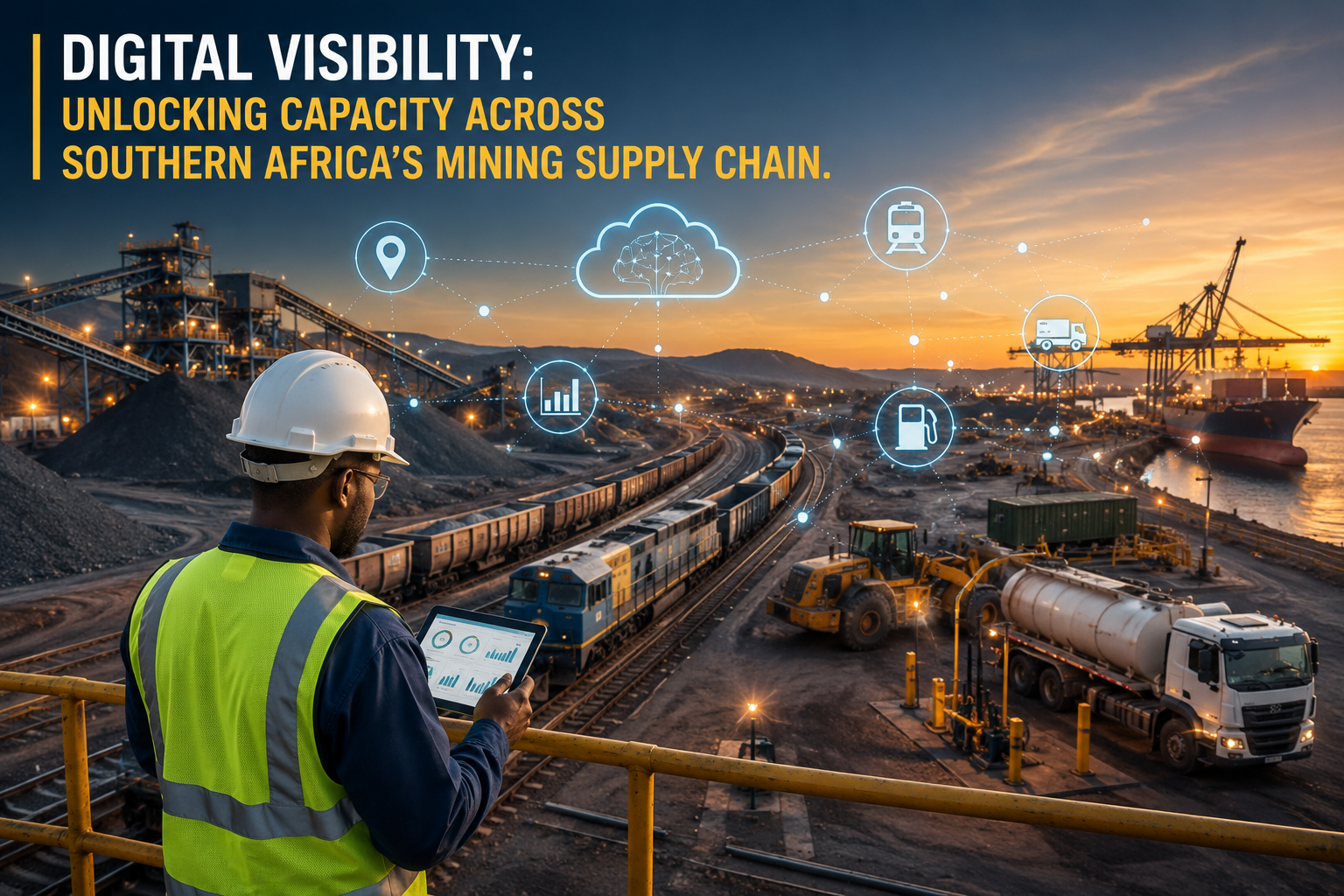
Real-time operational intelligence enables mining companies to know exactly where fuel, mobile equipment, transport assets and critical inventory are located, how efficiently they are being utilised and whether operations are performing according to plan.
Automated fuel management systems, for example, eliminate manual record-keeping while providing immediate insight into fuel inventories, deliveries, dispensing activities and equipment consumption. This improves accountability, reduces fuel losses and ensures that mobile equipment remains available when required. The result is faster refuelling, improved reconciliation, fewer supply interruptions and greater confidence in operational decision-making.
The same benefits extend across the broader mining supply chain. Real-time visibility into locomotive fleets, stockpiles, maintenance workshops, loading facilities and export terminals enables operators to identify bottlenecks earlier, improve asset utilisation and better coordinate operations from mine to port.
Predictive maintenance further strengthens operational performance by continuously monitoring equipment health and identifying developing issues before failures occur. This proactive approach minimises unexpected downtime while improving equipment availability throughout the logistics network.
As organisations build trusted operational datasets, they also create the foundation for advanced predictive analytics and emerging artificial intelligence solutions. By integrating data from fuel management, fleet utilisation, maintenance records, inventory systems, production schedules and logistics movements, AI can identify potential bottlenecks before they impact production. Rather than reacting to delays, operators can proactively adjust maintenance schedules, equipment deployment and transport planning to minimise disruption and maximise throughput.
Lessons from Global Mining Operations
VERIDAPT’s experience supporting major mining, rail and terminal operations around the world has revealed several consistent lessons about successful digital transformation.
The most successful projects begin by solving clearly defined operational challenges rather than introducing technology for its own sake. Organisations that focus on measurable business outcomes—such as reducing fuel losses, increasing equipment availability or shortening turnaround times—typically realise faster returns on investment.
Reliable field hardware is equally important. Mining environments expose equipment to dust, vibration, extreme temperatures, moisture and continuous operation. Visibility systems are only as dependable as the hardware responsible for collecting operational data.
Open architecture also plays a critical role. Modern mining supply chains involve multiple contractors, transport providers and enterprise systems. Digital platforms capable of integrating seamlessly with existing software allow information to flow across organisational boundaries without creating additional complexity.
Perhaps most importantly, operational data must become part of everyday decision-making. Dashboards alone do not improve productivity. Continuous monitoring, automated alerts, exception reporting and clearly defined operational workflows are what ultimately drive meaningful performance improvements.
Strengthening Southern Africa’s Mining Supply Chains
As Southern Africa continues expanding its role in supplying critical minerals to global markets, supply chain resilience is becoming increasingly important.
When disruptions occur—whether caused by transport congestion, equipment failures, fuel shortages, adverse weather or shifting export demand—operators with real-time visibility are able to respond far more quickly than organisations relying on delayed or incomplete reporting.
Improved visibility also enables better utilisation of valuable assets. Mobile refuelling equipment, fuel storage facilities, maintenance resources and loading infrastructure can all be deployed more effectively when supported by accurate, real-time operational data.
For a region where export competitiveness depends on moving greater volumes through constrained logistics networks, improving the utilisation of existing infrastructure offers immediate opportunities while larger rail, port and transport expansion projects continue to progress.
Digital visibility cannot remove every operational constraint. However, it enables mining companies to maximise existing assets, reduce avoidable delays, improve coordination and strengthen resilience throughout regional trade corridors.
As global demand for critical minerals continues to grow, the next competitive advantage for Southern Africa’s mining industry may not come from building more infrastructure—but from gaining greater visibility into how existing infrastructure performs. Organisations that invest in trusted operational data, real-time visibility, predictive analytics and AI-driven decision-making will be best positioned to unlock hidden capacity, improve productivity, reduce costs and build more resilient mining supply chains.