

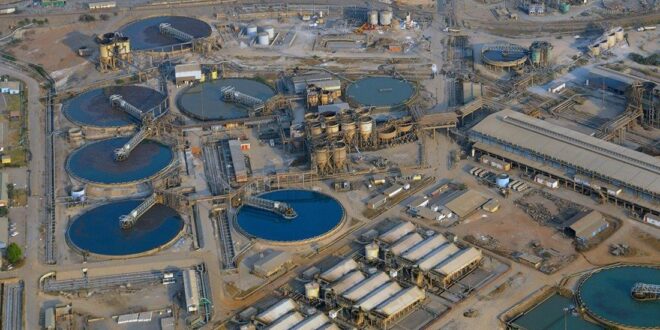

Zambia’s mining industry experienced a mixed start to 2026, with total copper production declining by 4.27% in the first quarter, even as major mining operations posted notable gains. Data released by Mines Minister Paul Kabuswe revealed that copper output for the period ending March 2026 stood at 208,992 metric tonnes, down from 218,308 metric tonnes recorded during the same period in 2025.
The decline reflects the combined output of both large-scale mining companies and small-scale producers, highlighting persistent operational challenges affecting parts of the sector despite continued global demand for copper, largely driven by the global energy transition and electrification agenda.
However, the overall decline masked stronger performance from some of Zambia’s leading mining operations. Production from large-scale mines increased by 1.8% year-on-year, signaling resilience among the country’s major copper producers. Key gains were recorded at Lumwana Mine, Konkola Copper Mines (KCM), and Mopani Copper Mines, alongside improvements at several other operations.
These gains helped cushion sharper declines experienced at other major mines, pointing to growing differences in operational efficiency and investment levels across the sector. Well-capitalised operations continue to perform strongly, while others face challenges linked to aging infrastructure, operational disruptions, or ore quality constraints.
Within the regional mining landscape, Zambia continues to maintain its position as Africa’s second-largest copper producer, behind the Democratic Republic of Congo (DRC). Although Zambia registered a production decline, the downturn remained less severe compared to the DRC, where copper exports reportedly dropped by nearly 15% during the same period.
The slowdown also extended beyond copper, with cobalt production falling by 9.15% year-on-year in the first quarter, reflecting broader pressure on Zambia’s base metals sector. The figures reinforce the need for sustained investment, policy stability, and infrastructure development if Zambia is to achieve its long-term ambition of significantly increasing copper production.
Commenting on the performance, Mines Minister Paul Kabuswe highlighted the importance of strong output from large-scale mines in helping stabilise the industry during a challenging period.
“Despite the decline in overall copper production, first-quarter output from large-scale mines rose 1.8% year-on-year. Production gains were recorded at Lumwana Mine, Konkola Copper Mines, Mopani Copper Mines and several other operations, offsetting declines at other major mines,” Kabuswe said.




You must be logged in to post a comment.